Back in 1947, a group of engineers at Harvard University located a literal moth trapped inside a relay of the Mark II computer. Grace Hopper, the legendary pioneer, famously taped the insect into her logbook. This event marked the first time a system was officially "debugged." For seven decades after that moment, creating anything in the digital realm remained a hostage to this specific level of granularity. Building software meant speaking the machine's tongue. You had to master the semicolon, the bracket, and the memory leak. Everyone had to act as a translator before they could act as an architect. Technical literacy served as the ultimate gatekeeper to the digital economy.
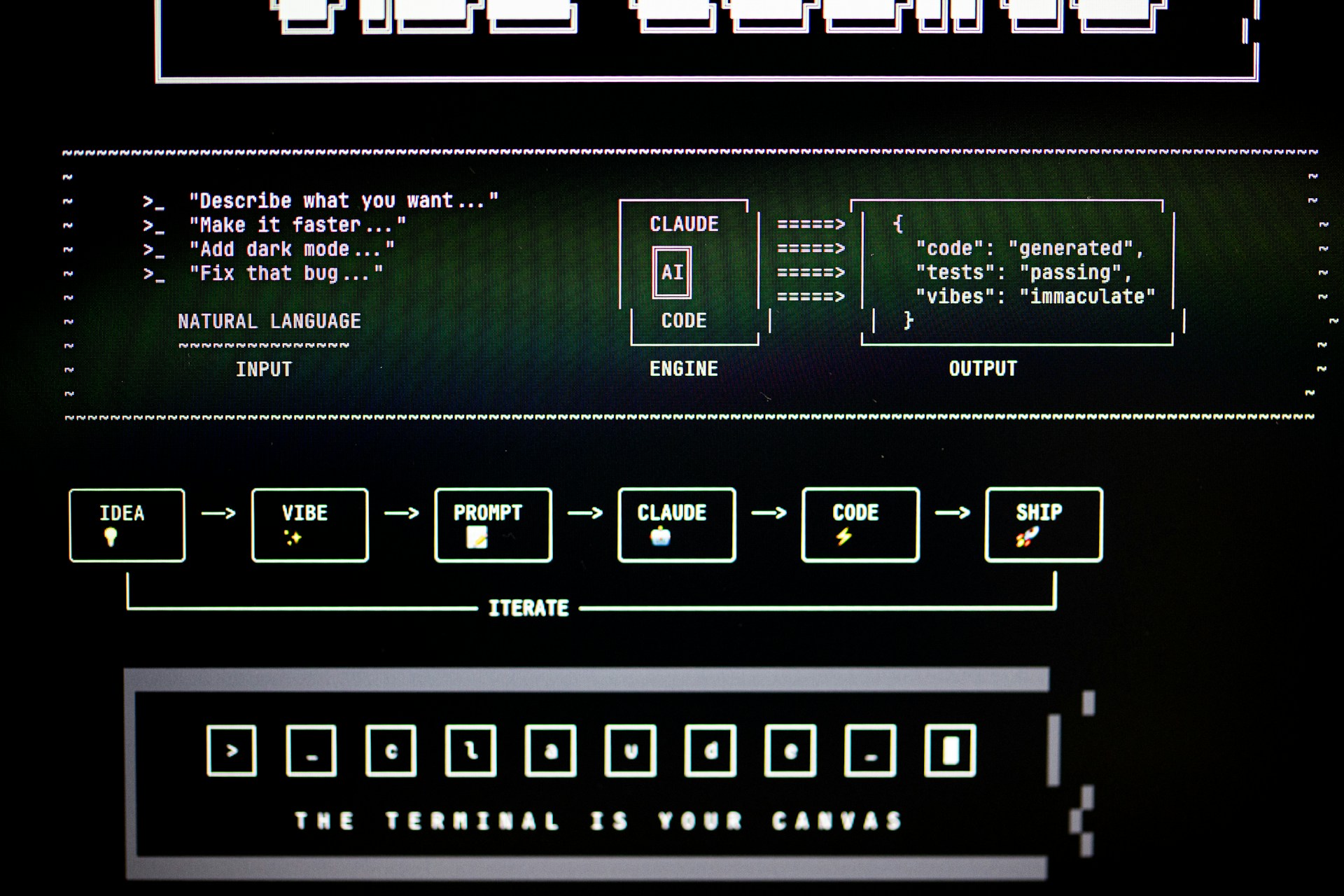
The linguistic moat is now evaporating. A new era of "vibe coding" has arrived, representing a massive shift in human productivity. Vibe coding signifies the transition from writing rigid syntax to describing intent. Natural language has become the most powerful programming language ever devised. Jensen Huang, the CEO of Nvidia, noted recently that the "coding gap" is closing because the computer finally understands us (rather than forcing us to understand it). In 1953, the president of IBM suggested there was a world market for maybe five computers. Today, the world market for "creators" looks more like eight billion people.
I built bookstoread.ai using this exact methodology. I avoided months of wrestling with boilerplate code or environment configurations. Modern platforms have simplified the initial hurdle. Tools like Lovable allow you to build full-stack web applications from a simple chat prompt, handling the frontend and the database simultaneously. Other environments, such as Replit, provide an all-in-one workspace where an AI agent can build and deploy your entire project in a single tab. For those working on deeper, more complex codebases, Claude Code operates as a terminal-based agent that reasons through multi-file edits with astonishing precision.
The process worked for me. However, a reality check is necessary: going from zero to ninety percent feels deceptively easy. You can "vibe" a prototype into existence in a single afternoon using these tools. The final ten percent (the jump from a cool demo to a production-grade product with secure integrations and zero bugs) remains a complex gauntlet. High-level intent gets you to the door, but engineering gets you through it.
Moving Beyond Assembly and Ambiguity
Computing history follows a relentless march toward higher levels of abstraction. We moved from physical punch cards to Assembly, then to C, then to the "human-readable" scripts of Python and Ruby. Each step lowered the barrier to entry while still requiring rigid adherence to logic. If you missed a comma in 1995, your program died. In 2026, if you describe a "vibe" to a modern Large Language Model, it creates the missing comma based on the statistical probability of your intent.
Software democratization represents a massive arbitrage opportunity for the "idea people" who were previously locked out of the tech economy. In 2023, the global developer population was estimated at roughly 27 million. In a world of vibe coding, that number expands to anyone with a coherent thought. The "moat" for software companies no longer consists of the code itself. Instead, it relies on data, distribution, and the unique insight of the creator. Code has become a commodity.
Anyone can prompt a facade into existence that looks like a professional application. But these tools usually function as digital stage sets, hollow behind the scenery. They lack the structural integrity to survive real-world stress. Building something that lasts requires an obsession with the deep structures of systems, design, and human psychology. You cannot simply prompt your way to greatness without an internal, foundational library of your own. It takes more than a vibe. The following books offer the roadmap for crossing that treacherous gap between a working demo and a product that actually ships.
Essential Vibe Code Books for Building Real Products
Mastering this shift requires you to stop thinking like a typist and start thinking like a systems architect. You are no longer managing semicolons (you are managing complexity). These books provide the practical scaffolding required to turn a "vibe" into a masterpiece that actually works in the wild.
Vibe Coding: Building Production-Grade Software with GenAI, Chat, Agents, and Beyond by Gene Kim & Steve Yegge
The Hook: A rigorous guide to ensuring your AI-generated software doesn't collapse the moment a real user touches it.
The Why: Gene Kim is the philosopher-king of modern DevOps, and he applies that rigor to the world of generative AI. This book addresses the "90 to 100" problem head-on. It explains how to wrap your "vibes" in professional grade infrastructure, focusing on observability, security, and the integration of autonomous agents. If you want your app to be more than a weekend project, this is your manual for the architectural heavy lifting.
The Golden Nugget: High velocity creation is worthless without high reliability systems. You must learn to audit what the AI builds as strictly as you would a human hire.
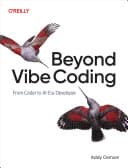
Beyond Vibe Coding: From Coder to AI-Era Developer by Addy Osmani
The Hook: A masterclass in shifting your mindset from "writing lines" to "managing intent" while maintaining elite performance standards.
The Why: Addy Osmani has long been a voice for engineering excellence, and this volume bridges the gap between traditional software craftsmanship and the new AI paradigm. It is intensely practical, offering workflows for debugging AI-generated code and optimizing the "last mile" of the user experience. It teaches you how to be the "editor-in-chief" of your codebase. This ensures that the final ten percent of the product meets the highest technical standards of 2026.
The Golden Nugget: The most valuable skill in the AI era is not "prompting," but the ability to recognize and fix the subtle regressions that AI introduces during the scaling phase.
Vibe Coding for Beginners Made Easy: From Idea to App in Record Time by David M. Patel
The Hook: A practical accelerant that shows you exactly how to manifest a vision into a functional application without a CS degree.
The Why: This is the unconventional entry point for the non-technical visionary. Patel strips away the jargon and focuses on the fastest path from a mental model to a visible interface. It is perfect for those who have spent years on the sidelines because they didn't know how to set up a server or write a SQL query. It empowers the "vibe" by providing the exact templates and conversational strategies needed to get an app running in record time.
The Golden Nugget: Speed is a feature. Use the AI to build your MVP today so you can spend tomorrow figuring out if anyone actually wants it.
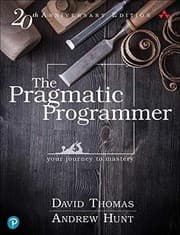
The Pragmatic Programmer: Your Journey to Mastery by Andrew Hunt and David Thomas
The Hook: The theoretical gold standard that provides the timeless wisdom needed to survive the chaos of modern creation.
The Why: While the previous books are the "how," this is the essential "why." Even though it was originally written before the LLM revolution, its principles are more relevant now than ever. It teaches you how to think about modularity, orthogonality, and the "DRY" (Don't Repeat Yourself) principle. In a world where AI can generate ten thousand lines of code in seconds, the ability to recognize clean, maintainable logic is the only thing that will keep your project from becoming an unmanageable mess. This is the book that separates the amateurs from the masters. Buy it, read it, and keep it on your desk. It is the most important investment you will make in your career.
The Golden Nugget: Care about your craft. Even when a machine is doing the heavy lifting, the responsibility for the quality of the output remains entirely yours.
Why Modern Leverage Changes the Value of Code
The shift to vibe coding is not merely a technical curiosity (it is a fundamental restructuring of the labor market). In the old world, a startup needed a CTO, three backend engineers, and two frontend specialists just to ship a Minimum Viable Product (MVP). Today, a solo founder with a clear vision can ship that same MVP in a weekend. We are seeing the rise of the "One-Person Unicorn."
But there is a catch. In a world of infinite, cheap code, the value of "knowing how to code" plummets, while the value of "knowing what to build" skyrockets. This is the ultimate incentive for a liberal arts education in the age of Silicon. The most successful vibe coders will not be the ones who memorized LeetCode problems. They will be the ones who have read history, understood philosophy, and studied the greats of design. They will use their "co-intelligence" to bridge the gap between human desire and machine execution.
Software is no longer a destination. It is a medium. Much like the transition from oil painting to digital photography, the barrier to entry has dropped, but the bar for "art" has risen. When everyone has a camera, you have to be a better photographer. When everyone can code, you have to be a better thinker.
Turning Vibes into Reality
When I was vibe coding bookstoread.ai, the initial rush was intoxicating. I could see the interface taking shape in real-time. Buttons appeared, colors shifted, and the basic search functionality felt like magic. But then I hit the "90 percent wall."
Suddenly, the AI began making circular errors. One fix in the API would break the recommendation logic. The "vibe" was there, but the "wiring" was tangled. If you cannot perfectly align your prompts with your desired outcome, the machine will build something that looks right but fails silently. This is why the vibe code books listed above are essential. You must learn the discipline of version control and the art of the modular prompt. You must learn to treat the AI not as a magic wand, but as a high speed manufacturing plant that still requires a quality control manager.
Vibe coding is the democratization of the "how," but it places a massive burden on the "why." It frees us from the "moths" in the relays and allows us to focus on the poetry of the system. But poetry still requires grammar. If you want to ship your first product, embrace the vibe, but study the engineering.
Key Takeaways
The Essence of Vibe Coding
The transition from writing rigid code to describing intent using natural language represents a fundamental shift in creative power.
The 90/10 Gap
Manifesting a prototype is now trivial, but shipping a secure, production-grade application requires a transition from "vibing" to disciplined engineering.
Theoretical Gold
The Pragmatic Programmer: Your Journey to Mastery remains the essential guide for any creator. It provides the logical foundation required to audit and refine the machine's output.
The Economic Moat
In an era of infinite code, value shifts to unique data, strategic distribution, and the ability to solve human problems with high-signal intent.
The future of software is not written in Python. It is written in English, refined by taste, and powered by a deep understanding of the human condition. If you want to build the future, stop worrying about your syntax and start curating your library. The tools are ready. The question is: do you have a vibe worth coding?
What is the best book to learn vibe coding?
The Pragmatic Programmer: Your Journey to Mastery is the best starting point because it teaches the engineering habits that keep AI-generated code from falling apart. If you want a more direct AI-era playbook, Beyond Vibe Coding: From Coder to AI-Era Developer is the next best pick.
Which vibe coding book is best for beginners?
Vibe Coding for Beginners Made Easy: From Idea to App in Record Time is the most beginner-friendly. It focuses on getting a working app fast, without assuming you already know servers, SQL, or software architecture.
How do I go from prototype to production with AI coding tools?
Use Vibe Coding: Building Production-Grade Software with GenAI, Chat, Agents, and Beyond for the production side. Pair it with The Pragmatic Programmer: Your Journey to Mastery so you can catch the reliability and design problems that AI tends to miss.
Books mentioned in this article
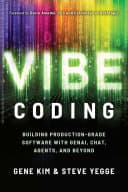
Vibe Coding: Building Production-Grade Software with GenAI, Chat, Agents, and Beyond
Gene Kim
Vibe Coding for Beginners Made Easy: From Idea to App in Record Time
David M. Patel
Want more books like these?
Tell us what you're in the mood for and get 3 perfect picks.
Discover your next read→