In the summer of 1998, a British historian achieved what the publishing industry considered a mathematical impossibility. He took a five-hundred-page volume on a fifty-year-old battle and turned it into a cultural phenomenon, selling over half a million hardback copies in the UK alone. That book was Stalingrad.
Before Beevor, military history was often relegated to dusty academic basements or the obsessive shelves of "war buffs" debating the technical specs of a Tiger tank. Beevor changed the incentive structures of the genre. He proved that history, treated with the precision of a novelist and the ruthlessness of an archival surgeon, could command the global mainstream.
To understand why Beevor holds such a dominant "moat" in historical literature, you have to look at his specific method of archival arbitrage. His rise coincided with the brief opening of the Soviet archives in the 1990s. While others relied on the sanitized memoirs of generals, Beevor was in the Podolsk archives, uncovering the visceral reality of the Eastern Front.
His work isn't just about movements on a map. It's about the intersection of grand strategy and the "grunt's-eye view." Beevor knows that a single letter from a frozen soldier in the Volga carries more signal than a thousand pages of official propaganda. The following books are the essential maps for anyone trying to understand the 20th century's collapse. [Find your next book at bookstoread.ai]
The Essential Library of Total War
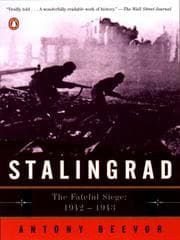
The Titan: Stalingrad
By Antony Beevor
- The Hook: The definitive account of the battle that broke the back of the Wehrmacht and changed the course of human history.
- The Why: This is the foundational masterpiece. Beevor uses newly opened Russian archives to reveal that the Red Army executed 13,500 of its own soldiers during the siege. It is a haunting study in the psychology of "no retreat." If you want to understand the origins of the modern Russian military mindset, you start here.
- The Golden Nugget: Success in total war is rarely about superior technology. It is about which side is willing to absorb a level of suffering that defies rational human calculation.
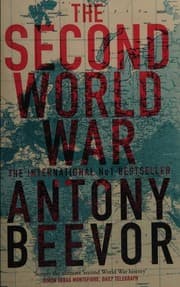
The Practical Match: The Second World War
By Antony Beevor
- The Hook: A panoramic, single-volume history that is both encyclopedic and intimate across every theater of the conflict.
- The Why: This is the actionable guide for those who need a comprehensive strategic overview without sacrificing human detail. Beevor connects the dots between the Sino-Japanese War and the Ardennes, showing that the conflict was a global "alignment problem" where decisions in the Pacific had immediate, bloody consequences in Europe.
- The Golden Nugget: War is rarely won by the brilliance of the few; it is almost always lost by the logistical and moral exhaustion of the many.
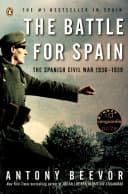
The Hidden Gem: The Battle for Spain
By Antony Beevor
- The Hook: An unsparing look at the ideological laboratory that served as a prequel to the slaughter of World War II.
- The Why: While his WWII books are more famous, Beevor's analysis of the Spanish Civil War is arguably more relevant to our current era of polarization. He dissects how extremism on both sides (Nationalists and Republicans) led to a "cleansing" mentality that decimated the political middle ground.
- The Golden Nugget: Ideology acts as a powerful anesthetic. It allows individuals to commit atrocities while believing they are performing a moral duty for the "common good."
The Archival Arbitrage: The Beevor Method
Beevor rejected the "High Modernist" approach to history. Most mid-20th-century historians were obsessed with the "Big Men" (Stalin, Churchill, Roosevelt). They believed that by analyzing the transcripts of the Tehran Conference, they could understand the war.
Beevor flipped the script. He looked for "unlegible" history: the diaries of nurses, NKVD execution lists, and Wehrmacht court-martial records. This was a strategic play. By focusing on primary sources that others ignored, Beevor created a high-signal narrative that felt entirely new. In Berlin: The Downfall 1945, his use of the personal diary of a Soviet officer allowed him to document the moral collapse of the advancing army in a way that official reports never could.
The Humanization of Logistics
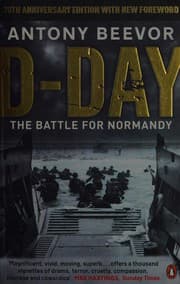
We often think of war as a series of tactical decisions. Beevor teaches us that war is actually a series of logistical catastrophes managed by desperate men. In D-Day: The Battle for Normandy, he spends as much time discussing the psychological impact of the "bocage" (the thick French hedgerows) as he does on Eisenhower's decisions.
He understands that the "Alignment Problem" in a military context is often a failure of information. In Normandy, Allied commanders were operating on maps that were fifty years out of date, leading to tragic friendly-fire incidents. This focus on the "friction" of reality is what makes his books so immersive. He doesn't just tell you the Germans lost at Stalingrad; he tells you what they ate (frozen horse meat) and why they continued to fight (the threat of their own execution).
The Legacy of the Inferno
History is a graveyard of bad decisions. Antony Beevor is its most meticulous coroner. His books are warnings about the fragility of our current "peace." We live in a world that has largely forgotten the visceral reality of total war. Beevor's work acts as a persistent, high-resolution reminder of what happens when the mechanisms of the state are turned toward the industrialization of death.
Key Takeaways for the Strategic Reader:
- Archival Arbitrage: Seek out the data points your competitors are ignoring to build a narrative moat.
- The Grunt's-Eye View: Connect grand strategy to the smallest individual human experience to ensure credibility.
- The Logic of Extremis: Under sufficient pressure, all social contracts dissolve into basic survival.
- Fact-Density is Power: Use specific, visceral details to anchor complex historical claims.
How can we apply Beevor's "archival surgery" to our own understanding of modern corporate and geopolitical failures?
[Find your next book at bookstoread.ai]
What is the best Antony Beevor book to start with?
Stalingrad is the best starting point. It is the book that made Beevor famous, and it shows his method at its sharpest: hard archival evidence, human detail, and no romance about war.
Which Antony Beevor book gives the best overview of World War II?
The Second World War is the best single-volume overview. It moves across every major theater without losing the ground-level suffering that makes Beevor readable.
Is Antony Beevor's book on Spain worth reading before his World War II books?
Yes. The Battle for Spain is the clearest prelude to the violence and polarization that followed in Europe, and it shows how Beevor handles ideology turning into mass cruelty.
Books mentioned in this article

Want more books like these?
Tell us what you're in the mood for and get 3 perfect picks.
Discover your next read→