
- The Death of the Outbound Budget
- Intent Arbitrage: The Canva Model
- Social Collective Buying: The Pinduoduo Model
- The Architecture of Scale: 7 Essential Reads
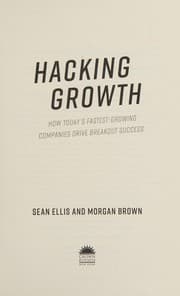
- 1. The Titan: Hacking Growth
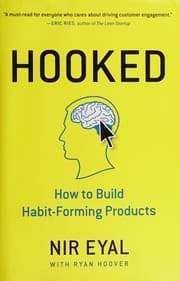
- 2. The Habit Builder: Hooked
- 3. The Network Authority: The Cold Start Problem
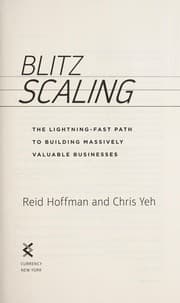
- 4. The Aggressive Play: Blitzscaling
- 5. The Psychological Anchor: Contagious
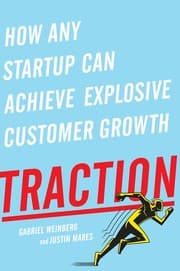
- 6. The Channel Strategy: Traction
- 7. The Manifesto: Growth Hacker Marketing
- The Logic of the Viral Loop
- The Arbitrage of Attention
- Key Takeaways
In the early 2010s, Airbnb was a struggling startup with a distribution problem. Their inventory was growing, but their audience was static. Instead of burning venture capital on legacy social media ads, they executed what remains the most sophisticated technical heist in Silicon Valley history.
They reverse-engineered a way to "piggyback" on Craigslist. Since Craigslist had no public API, the Airbnb team built a bot that allowed hosts to cross-post their listings with a single click. This siphoned off a massive, pre-existing user base and deposited them directly into the Airbnb ecosystem. It was not "marketing" in the traditional sense: it was a technical arbitrage that exploited a competitor's lack of engineering foresight.
The discipline of "growth hacking" is often diluted by influencers who treat it as a collection of cheap tricks. In reality, it is a rigorous framework sitting at the intersection of product development, data science, and behavioral economics. If you are not building growth into your source code, you are merely hoping for a miracle.
The Death of the Outbound Budget
Legacy marketing relies on a brute-force approach. You spend money to buy attention. Growth hacking, conversely, treats the product as the primary vehicle for its own distribution.
Consider YouTube. In 2006, video content was siloed. By allowing anyone to "take" the player and embed it on their own blog or MySpace page, YouTube effectively turned every website on the internet into a distribution node. The cost of this acquisition was nearly zero. They realized that the "embed" was more valuable than the "visit."
Similarly, when HubSpot launched its "Website Grader" tool, they weren't just providing a free service: they were creating a sophisticated lead-generation engine. By offering a high-value diagnostic tool, they gathered data on millions of potential customers while simultaneously establishing authority. It was an exchange of value for permission. [Find your next book at bookstoread.ai]

Intent Arbitrage: The Canva Model
Most people assume Canva grew because it had a better UI than Photoshop. That is a surface-level observation. Canva's true genius was Programmatic SEO and Intent Arbitrage.
They identified thousands of specific, high-intent search queries: "how to make a birthday card for a cat," "resumé for a florist," or "YouTube thumbnail for gamers." For each of these thousands of queries, Canva built a dedicated landing page and a specific template.
They didn't wait for people to discover their platform; they captured them at the exact millisecond they had a creative problem. They built a "backdoor" into the product for every possible niche need. This is the ultimate example of Product-Led Growth: the product exists where the problem is first voiced.
Social Collective Buying: The Pinduoduo Model
In the West, we think of viral growth as an individual act: "Invite a friend, get $10." In the East, Pinduoduo (the parent of Temu) mastered the "Atomic Network" through Social Collective Buying.
They realized that the "unit of growth" isn't one person; it's a team. By offering massive discounts that only trigger if you convince five friends to buy the same item within twenty-four hours, they turned every customer into a high-pressure sales manager.
This is the ultimate expression of the K-factor. By making the product literally cheaper for everyone as more people join, they aligned the user's financial self-interest with the company's distribution goals. They didn't just build a viral loop; they built a viral engine fueled by human greed and social proof.
The Architecture of Scale: 7 Essential Reads
To master these frameworks, you must move past the blog posts and study the foundational texts that explain the logic behind the mechanics. These volumes represent the essential curriculum for anyone serious about scaling a digital asset.
1. The Titan: Hacking Growth
By Sean Ellis & Morgan Brown
- The Hook: The definitive guide written by the man who actually coined the term "growth hacking."
- The Why: This book provides the internal organizational structure needed to run a growth team. It emphasizes the "high-tempo testing" cycle that separates winners from also-rans.
- The Golden Nugget: Growth is not a department: it is a cross-functional process that requires the breakdown of silos between engineering and marketing.
2. The Habit Builder: Hooked
By Nir Eyal
- The Hook: An examination of how products like Instagram and Slack keep users coming back without expensive notifications.
- The Why: Acquisition is useless without retention. Eyal explains the "Variable Reward" system that creates long-term user engagement.
- The Golden Nugget: To build a habit-forming product, you must link the user's internal itch (anxiety, boredom, or loneliness) to your product's external solution.
3. The Network Authority: The Cold Start Problem
By Andrew Chen
- The Hook: A modern analysis of how to solve the "chicken and egg" problem of starting a marketplace.
- The Why: Written by a leader on the Uber growth team, it provides a technical look at how networks reach a tipping point and become unstoppable.
- The Golden Nugget: You do not need a million users to start: you need one "atomic network" of just enough people to make the product useful for each other.
4. The Aggressive Play: Blitzscaling
By Reid Hoffman & Chris Yeh
- The Hook: The playbook for when growth is so fast it threatens to break your company.
- The Why: This is the authority pick for those who have already achieved Product-Market Fit. It discusses why efficiency must often be sacrificed for speed in a winner-take-all market.
- The Golden Nugget: In a network-effect business, being the first to reach "critical mass" is more important than having the best margins. You have to "embrace chaos" to win.
5. The Psychological Anchor: Contagious
By Jonah Berger
- The Hook: A deep dive into the psychological triggers that make ideas and products go viral.
- The Why: While most growth books focus on code, Berger focuses on the "human." He explains why some things are shared while others are ignored using the "STEPPS" framework.
- The Golden Nugget: Social currency is the most powerful driver of word-of-mouth. People share things that make them look good to their peers.
6. The Channel Strategy: Traction
By Gabriel Weinberg & Justin Mares
- The Hook: A systematic overview of the 19 different channels you can use to get users.
- The Why: Most founders fail because they keep trying the same two or three channels everyone else is using. This book forces you to test "under-indexed" channels where arbitrage is still possible.
- The Golden Nugget: In every stage of a company, there is usually one single channel that dominates your growth. Your job is to find it through systematic testing.
7. The Manifesto: Growth Hacker Marketing
By Ryan Holiday
- The Hook: A sharp, concise guide on pivoting from expensive traditional advertising to low-cost viral loops.
- The Why: It bridges the gap between old-school PR and the data-driven world of modern software.
- The Golden Nugget: The most effective marketing is that which is built directly into the product's user experience.
The Logic of the Viral Loop
Dropbox is the classic case study for the referral program, offering extra storage to both the referrer and the referee. This "two-sided incentive" was genius, but the real technical feat was the friction reduction. They made it so easy to share that the "k-factor" (the number of new users each existing user brings in) stayed high for years.
If your k-factor is 1.1, your growth is exponential. If it is 0.9, it is a slow death. Most companies fail because they focus on the "top of the funnel" while ignoring the "leaky bucket" (people leaving because the product is difficult to use). A true growth architect looks at the entire lifecycle. A 10% increase in retention is often more valuable than a 50% increase in new traffic.
The Arbitrage of Attention
Growth hacking is frequently a game of identifying underpriced assets.
- Hotmail famously grew to 12 million users in 18 months by simply adding a "P.S. I love you. Get your free email at Hotmail" link at the bottom of every outgoing message. Every user became a salesperson for the company. They turned their existing utility into a marketing channel.
- Spotify Wrapped - Every December, Spotify transforms a boring data-retention report into a global social media event. By giving users a beautifully designed identity to share, they turn their customer base into a massive, unpaid street team. The hack here is not technical: it is the realization that people are inherently narcissistic and love to share their curated tastes.
The "hack" here is not technical: it is the realization that people are inherently narcissistic and love to share their curated tastes.Product-Led Growth: The product must be its own best marketing tool. If it does not sell itself through utility, no amount of advertising will save it.
Key Takeaways
- Endowment Engineering: Let users build value in your product before you ask them to pay. The fear of losing a workflow (The Airtable model) is the strongest conversion tool.
- Data Over Intuition: High-tempo testing beats gut feeling. If you cannot measure it, you cannot grow it.
- Identify Arbitrage: Look for platforms or intent-queries that are currently undervalued by your competitors.
- Retention is King: Fix the leaky bucket before pouring more water in.
The history of Silicon Valley is a history of identifying underpriced attention. As we move into an era of AI-driven distribution, the question remains: are you building a product, or are you building a growth engine?
What is the best book to learn growth hacking?
Hacking Growth is the best starting point because it treats growth as a repeatable process, not a bag of tricks. It is the most practical book here for building a real growth team.
Which growth book is best for product-led growth?
Hooked and Growth Hacker Marketing are the clearest fits. Hooked explains why users return, while Growth Hacker Marketing shows how the product itself becomes the marketing channel.
What book should I read for marketplace and viral growth?
The Cold Start Problem is the strongest pick for marketplaces and network effects. Pair it with Contagious if you want the psychology behind why people share in the first place.
Books mentioned in this article



Want more books like these?
Tell us what you're in the mood for and get 3 perfect picks.
Discover your next read→