In 1851, Isaac Singer had a problem. He had invented a world-changing sewing machine, but it cost $100: more than most families earned in an entire year. His "genius" product was a commercial failure because it was unbuyable. Singer didn't solve this with better engineering: he solved it with a radical new social contract.
He created a network of independent "agents" who paid for the right to sell his machines and teach people how to use them. He wasn't just selling hardware: he was selling a career, a training system, and a financing model. Singer had accidentally invented the modern franchise. He realized that the machine was irrelevant if the system for moving it didn't exist.
Franchising is the art of manufacturing certainty. It is the transition from being a master craftsman to being a master tool-maker. If your business depends on your unique charisma, you do not have a franchise: you have a high-paying job. To scale, you have to "de-skill" the front line while "hyper-skilling" the system.
The following six books are the definitive curriculum for turning "magic" into a repeatable, global process.
1. The E-Myth Revisited by Michael E. Gerber
Gerber's core insight is the "Technician's Trap." Most people start a bakery because they love to bake. Gerber argues this is a fatal mistake. A baker knows how to bake, but a business owner knows how to build a system that bakes.
The Lesson of the "Turn-Key Revolution": Gerber suggests you act as if your single store is the pilot for a 5,000-unit chain. This forces a psychological shift: you stop mopping the floor and start writing the manual on how to mop the floor.
- The Depth: Consistency is more important than brilliance. A customer would rather have a "7 out of 10" experience that is identical every time than a "10 out of 10" experience that is occasionally a "3." In franchising, the system is the product.
2. Grinding It Out by Ray Kroc
Ray Kroc didn't join McDonald's until he was 52. He was a milkshake machine salesman with failing hearing and a persistent obsession with "systems." When he first walked into the McDonald brothers' kitchen in San Bernardino, he didn't see burgers: he saw a ballet of efficiency.
The Real Estate Pivot: The most famous story in the book is when Kroc's financial advisor, Harry Sonneborn, told him: "You're not in the hamburger business. You're in the real estate business." By owning the land under the golden arches, Kroc ensured that his franchisees followed his rules. If they didn't follow the system, they didn't just lose a brand: they lost their lease.
- The Insight: Power in franchising comes from the "Three-Legged Stool": the franchisor, the franchisee, and the suppliers. Kroc refused to sell supplies to his own franchisees to avoid a conflict of interest, a move that is still studied in business schools today as the ultimate move in "long-term trust building."
3. Pour Your Heart Into It by Howard Schultz
If Ray Kroc is the king of efficiency, Howard Schultz is the king of the "Third Place." This is the story of how Starbucks moved from a single bean store in Seattle to a global phenomenon.
Replicating the "Soul": Schultz's challenge was the opposite of Kroc's. How do you scale a "vibe"? How do you take a cozy Italian espresso bar feel and replicate it 30,000 times without making it feel like a sterile cafeteria?
- The Deep Lesson: Schultz proved that you can standardize an emotion. Through rigorous training and employee ownership (Bean Stock), he turned baristas into brand ambassadors. It's a masterclass for premium brands that fear scaling will kill the magic. He showed that culture is not "the soft stuff": it is the hardest infrastructure you will ever build.
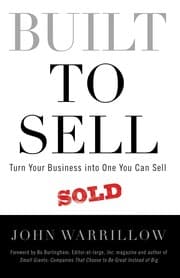
4. Built to Sell by John Warrillow
This is a narrative-driven book about an agency owner named Alex who realizes his business is "worthless" because he is the primary salesman and creator.
The Power of the "Standard Service Offer": To be franchisable, you must find your "Box." Alex's agency did everything: logos, ads, PR. To scale, he had to stop doing "everything" and start doing "one thing" (logo design) perfectly.
- The Strategy: Innovation is often the enemy of the franchise unit. Once the system is set, the goal is "Immaculate Execution," not creative pivoting. This book teaches you how to prune your business until it is simple enough to be replicated by someone who doesn't have your 20 years of experience.
5. The Wealthy Franchisee by Scott Greenberg
Why do some Subway owners make $200k a year while others in the same city go bankrupt? Greenberg, a former high-performing franchisee himself, explores the "Human Variable."
The "System Rebel" Paradox: Most franchisees fail because they try to "tweak" the system. They think they can make a better burger or a better marketing flyer. The most successful franchisees are "System Rebels": they follow the operational manual 100% to save time, and then use that saved time to bring 110% energy to their staff and local community.
- The Wealth Gap: Wealth in franchising comes from multi-unit ownership. You do not get rich owning one store: you get rich by using the cash flow of the first store to buy the second, third, and fourth.
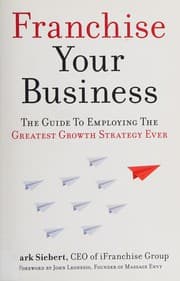
6. Franchise Your Business by Mark Siebert
If the other books are about soul and strategy, Siebert is about the hardware. This is the cold, hard mechanics of FDDs (Franchise Disclosure Documents), legal territories, and royalty structures.
The Financial Engineering: Scaling a franchise is a delicate balancing act. If your royalty fee is too high, your franchisees will revolt: if it is too low, you will not have the capital to protect the brand.
- The Field Consultant: Siebert argues that your most important early hire is a "Field Consultant": someone whose only job is to ensure standards are met. Without enforcement, your brand is just a suggestion. This is the difference between a "Chain" and a "System."
Final Thought: The Scalability Paradox
Franchising is the ultimate way to "scale yourself." It allows you to be in a thousand places at once. But to get there, you have to be willing to let go of the very things that made you successful in the beginning: your personal control and your constant improvisation.
As Isaac Singer discovered 175 years ago: the product is just the bait. The system is the catch.
What is the best book to start franchising a business?
The E-Myth Revisited is the best starting point because it explains why most owner-operators fail to scale. It forces you to think like a systems builder before you worry about legal documents or royalties.
Which book explains how McDonald's became a franchise empire?
Grinding It Out is the one to read. It shows how Ray Kroc turned process, real estate, and control of the system into a machine that could scale.
What book should I read if I want to franchise a service business?
Built to Sell is the sharpest fit. It shows how to strip a business down to one repeatable offer, which is exactly what a service company needs before it can be franchised.
Books mentioned in this article
Want more books like these?
Tell us what you're in the mood for and get 3 perfect picks.
Discover your next read→