- 1. The Future of Geography by Tim Marshall
- 2. Chokepoints by Edward Fishman
- 3. The End of the World Is Just the Beginning by Peter Zeihan
- 4. The Geopolitics of Energy System Transformation by Michael J. Bradshaw
- 5. The End of Everything by Victor Davis Hanson
- 6. The Revenge of Geography by Robert D. Kaplan
- 7. Why Nations Fail by Daron Acemoglu and James A. Robinson
- The Synthesis: Your 2026 Strategic Stack
It used to be that geopolitics was a niche hobby for history buffs and diplomats: something we read about in dusty volumes to understand a past that felt distant. But lately, the world has shifted. The abstract concepts we once studied in books: supply chain fragility, resource nationalism, and the "chokepoints" of global trade, have suddenly become our daily reality. We see it in the rising price of technology, the sudden shifts in energy markets, and the persistent hum of tension in the news.
To navigate 2026, you don't need more news updates; you need a better lens. Geopolitics is that lens. It is the study of the hard constraints of our planet: the mountains, rivers, and demographic cliffs that force world leaders to make the moves they do.
If you are looking for the best beginners books in geopolitics, you are looking for a way to stop being a passenger in the global economy and start understanding the map. Here are seven essential reads to build your strategic foundation.
1. The Future of Geography by Tim Marshall
Most people recommend Marshall's first book, but in 2026, the real frontier is above us. In this volume, Marshall takes the logic of "Prisoners of Geography" and applies it to low-earth orbit and the Moon.
The Strategic Lens: We often think of space as a scientific endeavor, but Marshall shows it is the ultimate "high ground." The race for lunar resources and satellite dominance is just the newest iteration of the same land grabs we've seen on Earth for centuries. It's essential for understanding why the US, China, and private corporations are suddenly obsessed with territory 240,000 miles away.
2. Chokepoints by Edward Fishman
Edward Fishman is a former State Department official who understands that in the modern world, a banking code can be more powerful than a battalion of tanks.
The Insight: Fishman explains how the global financial system was transformed into a weapon. This book is a visceral look at "Financial Geopolitics": the ability to cut a nation off from the world economy. It provides the perfect context for anyone trying to understand the sanctions and trade wars that dominate our headlines. It's a book about the plumbing of power.
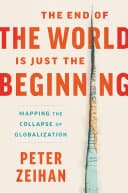
3. The End of the World Is Just the Beginning by Peter Zeihan
Zeihan is the "wildcard" of geopolitical thinkers. He is blunt, often controversial, and incredibly focused on the intersection of demographics and geography.
The Grit: His central argument is that the US-led global order is collapsing, and we are heading into a period of "Disunity." Zeihan's focus on the aging populations of Europe and Asia is a sobering reality check. Whether you agree with his predictions or not, his analysis of why certain countries are physically and demographically doomed, while others are "accidental superpowers", is a masterclass in strategic logic.
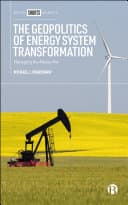
4. The Geopolitics of Energy System Transformation by Michael J. Bradshaw
Energy is the primary mover of history. As the world attempts a "Green Transition," we aren't just changing lightbulbs; we are changing the entire balance of global power.
The Deep Dive: Bradshaw explains "The Messy Mix," the dangerous transition period where we are still dependent on fossil fuels but are already fighting over the minerals needed for batteries and turbines. If you want to know why certain regions are suddenly becoming "Resource Curses" again, this is the book you need. It connects the electricity in your home to the mines in the Congo and the politics of Beijing.
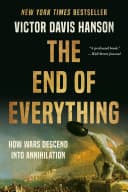
5. The End of Everything by Victor Davis Hanson
To truly understand the future, you have to witness the absolute failure of the past. Hanson looks at ancient civilizations that were erased from the map because they ignored the geopolitical stakes of their time.
The Warning: This is a visceral reminder that prosperity and stability are not the default settings of history. Hanson's analysis of how military and strategic neglect leads to total collapse serves as a vital perspective for 2026. It's a book about the high cost of ignoring the map.
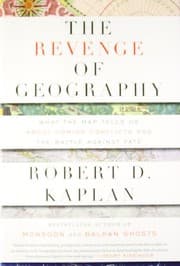
6. The Revenge of Geography by Robert D. Kaplan
Kaplan is the philosopher-king of this genre. He argues that we have become too "idealistic," believing that technology and values can overcome the physical reality of the Earth.
The Connection: Kaplan revisits the classic strategic thinkers of the 19th and 20th centuries and shows how their ideas still dictate the movements of modern empires. He has traveled the ground he writes about, and his prose is a haunting reminder that the ghosts of geography always have the final say in human affairs.
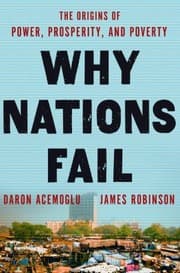
7. Why Nations Fail by Daron Acemoglu and James A. Robinson
Geography explains the constraints, but institutions explain the outcome. I include this because it is the necessary "Internal Map" to accompany the "External Map" of geography.
The Human Variable: Why do two countries with similar geographic advantages end up so differently? The answer lies in whether their institutions are "inclusive" or "extractive." This book provides the essential context for understanding why some nations use their location to build wealth, while others use it to build prisons. It's the final piece in the geopolitical puzzle.
The Synthesis: Your 2026 Strategic Stack
The news provides the "What," but these books provide the "Why." If you want to build a genuine strategic edge, stop consuming fragmented updates and start reading in clusters:
- Start with Marshall to understand the new frontiers of the map.
- Use Fishman and Zeihan to see how the current system is being dismantled.
- Use Hanson to understand the absolute stakes of the game.
The map is currently being redrawn in real-time. These seven books don't just show you where the lines are: they show you why they were drawn there in the first place.
What is the best geopolitics book for beginners?
The Revenge of Geography is the best first pick because it explains the core logic of geopolitics without assuming you already know the field. If you want a more current angle, The Future of Geography is the next step.
Which geopolitics book explains sanctions and trade wars?
Chokepoints is the one to read. It shows how finance and access to the global system can be used as weapons, which is exactly how modern sanctions work.
Should I read Peter Zeihan or Tim Marshall first?
Read Tim Marshall first. The Revenge of Geography gives you the basic map, while The End of the World Is Just the Beginning is more aggressive and predictive, so it lands better after you know the framework.
Books mentioned in this article
Want more books like these?
Tell us what you're in the mood for and get 3 perfect picks.
Discover your next read→