- 1. The Weaponization of Finance: Chokepoints by Edward Fishman
- 2. The Technological Bottleneck: Chip War by Chris Miller
- 3. The Physical Prison: Prisoners of Geography by Tim Marshall
- 4. The Blueprint of Institutional Power: The Power Broker by Robert Caro
- 5. The Intelligence Frontier: The Coming Wave by Mustafa Suleyman
- 6. The Energetic Foundation: The Prize by Daniel Yergin
- The Strategic Audit
- 3 Rules for Identifying Chokepoints
History is often written by those who controlled the narrowest door. In 480 BC, a small Greek force held the pass at Thermopylae, turning a geographical bottleneck into a geopolitical lever. In 1941, the U.S. oil embargo on Japan acted as a strategic noose, proving that you don't need to fire a shot to paralyze an empire. Today, this ancient logic has migrated from mountain passes to undersea cables, financial clearing systems, and extreme ultraviolet lithography.
Working within the core of the global technology ecosystem, I have watched how "Compute Chokepoints" can render a multi-billion dollar roadmap obsolete in a single fiscal quarter. In a hyper-connected world, power is no longer about who owns the most; it is about who sits at the "Structural Hole" of the network. If you control the point through which everyone else must pass, you don't just participate in the market: you govern its physics.
The following six books are the essential maps for identifying the gates that control our era.
1. The Weaponization of Finance: Chokepoints by Edward Fishman
Edward Fishman, a former top official at the U.S. State Department, provides the definitive blueprint for how the United States transformed the global financial system into a strategic weapon.
The Genius: Fishman explains that American power in the 21st century does not rely on territorial conquest, but on the control of global "Chokepoints": the dollar-clearing systems and financial networks that every nation must use to survive. By selectively "unplugging" adversaries, the U.S. can exert massive pressure without deploying a single soldier.
The Strategic Insight: Interdependence is the new frontier for warfare. When the world is unified by a single financial architecture, the entity that manages the plumbing of that architecture holds the ultimate veto over global affairs.
2. The Technological Bottleneck: Chip War by Chris Miller
If finance is the software of global power, semiconductors are the hardware. Chris Miller's account of the microchip is a high-stakes thriller that explains why the world's most advanced technology depends on a single factory in Taiwan.
The Genius: Miller elegantly explains how the entire AI revolution is currently forced through a microscopic chokepoint: the lithography machines made by ASML in the Netherlands. Without these machines, the "Compute" that drives our world simply stops.
The Strategic Insight: We have built a digital civilization on a foundation of extreme physical fragility. Power in the 2020s is dictated by the ability to manufacture at the atomic scale.
3. The Physical Prison: Prisoners of Geography by Tim Marshall
While we talk of "the cloud," the physical reality of the earth remains the ultimate bottleneck. Tim Marshall's work is a reminder that geography is the one variable world leaders cannot optimize away.
The Genius: Marshall breaks down the world into ten maps, showing how the Himalayan mountains, the deep-water ports of the North, and the narrow Strait of Malacca dictate the life-and-death strategic choices of superpowers.
The Strategic Insight: To understand global trade and military risk, you must ignore the headlines and look at the terrain. Geography is the silent architect of every geopolitical crisis.
4. The Blueprint of Institutional Power: The Power Broker by Robert Caro
This is the "Old Testament" of status and control. It follows Robert Moses, the man who shaped modern New York without ever being elected to office.
The Genius: Caro meticulously documents how Moses used the construction of physical infrastructure: bridges, tunnels, and highways: as "institutional chokepoints." By controlling the flow of people and the flow of money, Moses became more powerful than governors and mayors.
The Strategic Insight: Influence is often built by creating a bottleneck that everyone else is forced to use. If you own the infrastructure, you don't need to win an election.
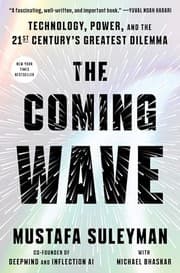
5. The Intelligence Frontier: The Coming Wave by Mustafa Suleyman
Mustafa Suleyman, a pioneer in deep learning, identifies the emerging chokepoints of the next decade: the containment of AI and synthetic biology.
The Genius: Suleyman argues that we are facing a wave of technology that is inherently decentralized and hard to restrain. He identifies the specific points of leverage: compute, data, and energy: where we might still be able to build "regulatory gates" before the technology becomes impossible to govern.
The Strategic Insight: The struggle of the 2030s will be the attempt to build digital chokepoints around autonomous intelligence before it escapes the laboratory.
6. The Energetic Foundation: The Prize by Daniel Yergin
Everything listed above requires one fundamental input: Energy. Daniel Yergin's epic history of the oil industry is the definitive guide to the ultimate bottleneck of the 20th century.
The Genius: Yergin explains how the quest for "The Prize" created the modern financial system and the middle class. Even as we transition to new energy sources, the logic remains: the entity that controls the flow of power (whether oil or electricity for data centers) dictates the speed of civilization.
The Strategic Insight: You cannot understand geopolitics or technology without understanding the massive energetic requirements that underpin them.
The Strategic Audit
These works represent the "Heavy Metal" of intellectual study. They are dense, structural, and often overwhelming in their scope. However, for those operating at a high level, the cost of not knowing these maps is far higher than the time spent studying them.
The goal isn't just to read about the past, but to develop the "Chokepoint Lens": the ability to look at a new technology or a political shift and instantly see where the bottleneck will form.
3 Rules for Identifying Chokepoints
- The Single Point of Failure: Ask: "If this one node stopped working, what else fails?" That is your chokepoint.
- Follow the Energy: Whether it is crude oil or GPU wattage, follow the source of energy to find the hidden gatekeepers.
- Search for Centrality: Power flows to the center of the network. Identify the hub that all the spokes are connected to.
What is a "chokepoint" in geopolitics?
A chokepoint is any narrow point of control — physical or institutional — through which a disproportionate amount of trade, data, energy, or finance must pass. Whoever controls that point holds leverage over everyone who depends on it, from the Strait of Malacca to the SWIFT financial network.
Why is Chip War by Chris Miller so relevant in 2026?
Because the AI revolution depends on advanced semiconductors, and the entire supply chain funnels through a handful of companies — most critically ASML in the Netherlands and TSMC in Taiwan. Miller's book explains why control of this bottleneck is the defining geopolitical contest of the decade.
Is The Power Broker really about chokepoints?
Yes. Robert Caro's biography of Robert Moses shows how institutional chokepoints work at the city level. Moses controlled New York's infrastructure — bridges, highways, parks — and used that control to accumulate more power than any elected official. It is the domestic blueprint for the same dynamics that play out globally.
Books mentioned in this article

Want more books like these?
Tell us what you're in the mood for and get 3 perfect picks.
Discover your next read→