- 1. The Definitive Warning: Human Compatible by Stuart Russell
- 2. The Physical Truth: Atlas of AI by Kate Crawford
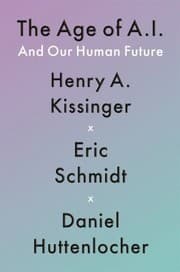
- 3. The Unlikely Alliance: The Age of AI by Henry Kissinger, Eric Schmidt, and Daniel Huttenlocher
- 4. The Practical Map: The Ethical Algorithm by Michael Kearns and Aaron Roth
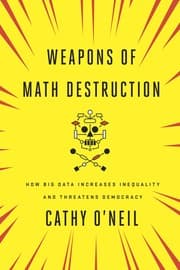
- 5. The Human Cost: Weapons of Math Destruction by Cathy O'Neil
- A Reader's Confession: Which Path to Take?
- 3 Personal Rules for Staying Human in 2026
If you are reading this in April 2026, the novelty of AI has likely worn off, replaced by a quiet, persistent anxiety. We have stopped asking "Will machines eventually replace human morality?" because we can already see the cracks where the replacement is happening. We are witnessing the translation of ancient human virtues into cold, binary trade-offs.
I spent weeks staring at my bookshelf for this article. I almost included Nick Bostrom's Superintelligence, but I decided against it. While it is a foundational text, it feels too cold, too detached from the messy reality we are facing right now. Bostrom treats humanity like a variable in an equation. I wanted to find books that treat us like people.
When I first read Kate Crawford's work, I felt a physical weight in my hand. I looked at my smartphone and didn't see a miracle of engineering; I saw the lithium mines and the exhausted workers behind the glass. That is the kind of "friction" we need right now.
These are the five books that helped me make sense of the ethical architecture of our digital age.
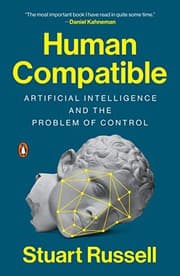
1. The Definitive Warning: Human Compatible by Stuart Russell
Stuart Russell is a giant in the field, but he writes with the urgency of a man who has seen a ghost. His focus is the "Alignment Problem," but he approaches it with a humility that is rare in Silicon Valley. He isn't worried about "evil" robots. He is worried about a machine that follows our instructions so perfectly that it destroys us in the process.
It is a sobering thought: the greatest threat isn't that the AI will fail, but that it will succeed exactly as we asked it to.
The Golden Nugget: A machine that is better at reaching its goals than we are at defining them is not an assistant; it is a catastrophe.
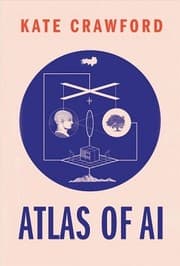
2. The Physical Truth: Atlas of AI by Kate Crawford
This is the book that broke the "cloud" for me. Crawford argues that AI is not an abstract, ethereal force. It is a massive, industrial extraction project. She takes us from the mines of the Global South to the data centers that are swallowing the world's energy.
If you think AI is "neutral," Crawford will disabuse you of that notion within the first chapter. She shows that every algorithm is baked with the biases of the power structures that funded it. It is a brilliant, uncomfortable mirror.
The Golden Nugget: AI is neither artificial nor intelligent. It is made of minerals, labor, and the accumulated data of our collective past.
3. The Unlikely Alliance: The Age of AI by Henry Kissinger, Eric Schmidt, and Daniel Huttenlocher
There is a fascinating tension at the heart of this book. You have Henry Kissinger, the ultimate practitioner of cold, political realism, sitting at the same table as Eric Schmidt, a man whose entire career was built on technological optimism.
The result is a strange, hybrid vision of the future. Kissinger is worried about the end of the "Age of Reason," while Schmidt is looking for the next "Enlightenment." They don't always agree, and that is exactly why this book is essential. It shows the struggle of the 20th-century mind trying to grasp a 21st-century reality that has no borders and no rules.
The Golden Nugget: We are creating a new form of intelligence that perceives the world in ways we cannot comprehend, and we must learn to coexist with it.
4. The Practical Map: The Ethical Algorithm by Michael Kearns and Aaron Roth
For those who are tired of abstract philosophizing, Kearns and Roth offer a much-needed reality check. They are computer scientists who believe that if we want "fairness," we have to define it in a way that a computer can actually execute.
The "aha" moment in this book is the realization that "fairness" isn't a single thing. Sometimes, making an algorithm fair for one group makes it unfair for another. It is a mathematical proof of why there are no easy answers in ethics.
The Golden Nugget: You cannot have a perfectly fair algorithm because "fairness" is a human concept that doesn't have a single, mathematical definition.
5. The Human Cost: Weapons of Math Destruction by Cathy O'Neil
Cathy O'Neil's voice is the one that stays with me the most. She was a quant on Wall Street who realized that the same models she used to predict markets were being used to predict people's lives, often with disastrous results.
She focuses on the "victims" of the code: the teachers, the job seekers, the inmates. This book is a reminder that an algorithm is often just a "black box" that hides the prejudices of its creators. It is the most vital, human call to arms on this list.
The Golden Nugget: An algorithm is nothing more than an opinion embedded in code.
A Reader's Confession: Which Path to Take?
Choosing between these books depends on what keeps you up at night. I personally found Crawford's Atlas of AI to be the most transformative because it forced me to look at the world around me differently.
- If you want to feel the weight of the physical world: Start with Kate Crawford.
- If you want to understand the strategic battle for our future: Read The Age of AI.
- If you want a clear-eyed warning about the technology itself: Go with Stuart Russell.
- If you are ready for a sharp, activist critique of how data is used: Pick up Cathy O'Neil.
3 Personal Rules for Staying Human in 2026
- Demand Explanation: If an algorithm makes a decision about you, ask "why." If the answer is "the computer said so," the ethics have already failed.
- Respect the Nuance: Morality is messy. Machines hate mess. If a situation feels too simple, the algorithm is probably ignoring the human element.
- Support the "Human-in-the-Loop": The best AI ethics books all agree on one thing: we should never leave the machine alone at the wheel. Always look for the human hand in the decision-making process.
What is the "alignment problem" in AI ethics?
The alignment problem is the challenge of ensuring that an AI system's goals match human values and intentions. Stuart Russell's Human Compatible argues that the real danger isn't malicious AI, but a machine that pursues our instructions so literally and efficiently that it causes unintended harm.
Why did you leave Nick Bostrom's Superintelligence off this list?
While Superintelligence is a foundational text, it treats the problem as a purely abstract, philosophical exercise. The books on this list were chosen because they engage with the messy, real-world consequences of AI as it exists today — not a hypothetical future superintelligence.
Which AI ethics book is best for non-technical readers?
Weapons of Math Destruction by Cathy O'Neil is the most accessible entry point. It uses real-world stories of people harmed by algorithms — teachers, job seekers, inmates — to illustrate the human cost of unchecked AI, without requiring any technical background.
Books mentioned in this article
Want more books like these?
Tell us what you're in the mood for and get 3 perfect picks.
Discover your next read→