
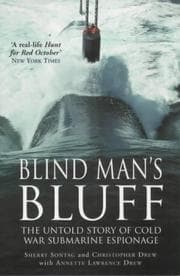
- 1. The Investigative Bible: Blind Man's Bluff by Sherry Sontag and Christopher Drew
- 2. The Commander's Perspective: Steel Boats, Iron Men by James C. Long
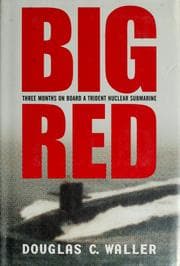
- 3. The Gritty Reality: Big Red by Douglas C. Waller
- 4. The British Perspective: Under Pressure by Richard Humphreys
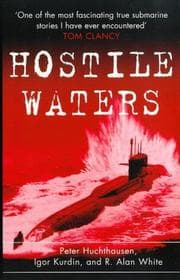
- 5. The Soviet Perspective: Hostile Waters by Peter Huchthausen and Igor Kurdin
- Why Submarine Memoirs are the Ultimate "Long-Tail" Read
- 3 Tips for Navigating the World of Submarine Literature
If you have ever stood on the deck of a submarine, you know that smell: a heavy, metallic mix of recirculated oxygen, amine (the chemical used to scrub CO2), and the faint, persistent scent of diesel and hydraulic fluid. It is a smell that sticks to your skin for weeks after you return to the surface.
In the 1970s and 80s, the Cold War wasn't just fought on maps in Washington or Moscow. It was fought in the "Shadow Zones" of the Barents Sea and the deep canyons of the Atlantic. While the rest of the world slept, nuclear-powered attack submarines were playing a high-stakes game of "Blind Man's Buff," tailing enemy boats so closely that their sonar domes were sometimes feet apart.
I've spent years collecting these stories, and I've learned that the best submarine memoirs aren't about the torpedoes. They are about the crushing weight of the silence, the psychological toll of being "blacked out" from the world for ninety days, and the absolute trust you place in the person sleeping in the bunk three inches above you.
Here are the five essential books that take you inside the hull, beyond the Hollywood clichés of The Hunt for Red October.
1. The Investigative Bible: Blind Man's Bluff by Sherry Sontag and Christopher Drew
Technically, this is a work of narrative non-fiction based on hundreds of interviews, but for anyone obsessed with the "Silent Service," it is the starting point. It exposed, for the first time, the incredible risks taken by the crews of the USS Halibut and the USS Parche.
The story of the "Ivy Bells" operation, where divers saturated at depth to tap Soviet underwater communication cables, reads like science fiction. But it was real. This book captures the sheer technical audacity of the era: how we used submarines to find lost hydrogen bombs and listen to the private conversations of Soviet admirals.
The Golden Nugget: Intelligence wasn't gathered by satellites; it was gathered by men who were willing to sit in a metal tube ten feet away from a Soviet hull in total darkness.
2. The Commander's Perspective: Steel Boats, Iron Men by James C. Long
I struggled with which commander's memoir to include, but I kept coming back to the stories of the "Fast Attack" skippers. Life on an SSN (Attack Submarine) was fundamentally different from the "Boomers" (Ballistic Missile Subs). While the Boomers hid, the Fast Attacks hunted.
James Long's accounts capture the intense pressure of the "Approach and Attack" phase. It is a masterclass in leadership under extreme stress. He describes the visceral feeling of "pinging" an enemy sub and the split-second decisions that could have triggered World War III. You feel the humidity of the engine room and the tension on the bridge during a surfacing in heavy ice.
The Golden Nugget: Command is a lonely business, but it is never lonelier than when you are two hundred meters below the ice and the sonar operator hears something he can't identify.
3. The Gritty Reality: Big Red by Douglas C. Waller
While technically about the USS Nebraska, this book provides the most detailed look at life on a Trident nuclear submarine. These are the "city-sized" boats, the ultimate deterrents. Waller spent months onboard, and he captures the strange, surreal culture of the crew.
What struck me most was the description of "the mid-watch." At 2
AM, when the rest of the world is asleep, the crew is performing complex maintenance on missiles that could destroy cities. It is a book about the boredom of the routine, punctured by moments of absolute, heart-stopping terror during "Battlestations" drills.The Golden Nugget: The most dangerous part of a nuclear submarine isn't the missiles; it is the human mind trying to stay sane in a windowless world.
4. The British Perspective: Under Pressure by Richard Humphreys
For a change of pace, we have to look at the Royal Navy's "Silent Service." Humphreys was a sonar operator, and his memoir is perhaps the most "human" on this list. He doesn't focus on the strategy; he focuses on the smells, the food (which was notoriously better than the surface fleet), and the psychological survival.
Humphreys describes the "Amine headache" and the strange, dark humor that develops when you live in a world where you can't shower for days and your laundry is washed in recycled water. It is a gritty, honest, and often funny look at the life of the "enlisted" men who actually kept the boat running.
The Golden Nugget: In a submarine, your hearing becomes your primary sense. You learn to "see" the world through the headphones of a sonar console.
5. The Soviet Perspective: Hostile Waters by Peter Huchthausen and Igor Kurdin
To truly understand the Cold War, you have to read the stories from "the other side." This book, co-written by a former Soviet captain, tells the story of the K-219, a Yankee-class submarine that suffered a catastrophic missile leak off the coast of Bermuda in 1986.
The cultural differences are fascinating. The Soviet crews lived in much harsher conditions, with less automation and higher risks of radiation exposure. This book is a tribute to the bravery of the sailors who fought to save their ship and prevent a nuclear disaster on the doorstep of the United States. It is a harrowing, tragic story that serves as a reminder of the true stakes of the Silent War.
The Golden Nugget: Bravery looks the same in every language, especially when you are fighting a fire in a poisoned hull.
Why Submarine Memoirs are the Ultimate "Long-Tail" Read
Submarine stories are a masterclass in "Constraint Storytelling." Because the setting is so limited, every detail matters. Every sound, every decision, and every personality clash is amplified.
In 2026, we are often overwhelmed by "too much world." These books offer the opposite: a look at a world that is incredibly small, incredibly focused, and incredibly dangerous. They remind us of what humans are capable of when they are pushed to the absolute limit of isolation.
3 Tips for Navigating the World of Submarine Literature
- Learn the "Sound": Before reading, look up "Acoustic Signatures" on YouTube. Hearing the difference between a biological sound (like a whale) and a mechanical sound (like a screw) will make the sonar scenes in these books come alive.
- Follow the "Lines of Bearing": Get a map of the Arctic Circle. When the authors talk about "the GIUK gap" (Greenland-Iceland-UK), look at the geography. You will realize why that specific stretch of water was the most contested real estate on Earth.
- Respect the Amine: When an author mentions the smell of the boat, remember that it is a smell that never leaves a submariner's memory. It is the scent of a world without a sky.
What is the best Cold War submarine book for beginners?
Blind Man's Bluff by Sherry Sontag and Christopher Drew is the ideal starting point. It reads like a thriller, covers multiple operations, and provides the broadest overview of Cold War submarine espionage without requiring any prior naval knowledge.
Are there any submarine memoirs from the Soviet perspective?
Yes. Hostile Waters by Peter Huchthausen and Igor Kurdin is co-written by a former Soviet captain and tells the story of the K-219 disaster. It is one of the few books that provides the Russian side of the Silent War.
What was the "GIUK Gap" and why does it matter in these books?
The GIUK Gap (Greenland-Iceland-UK) was a critical stretch of the North Atlantic where NATO forces attempted to detect and track Soviet submarines heading into the open ocean. It is referenced in nearly every Cold War submarine memoir as the most contested underwater territory on Earth.
Books mentioned in this article
Want more books like these?
Tell us what you're in the mood for and get 3 perfect picks.
Discover your next read→