
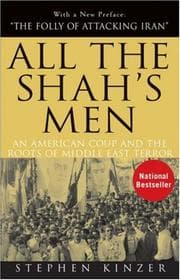
- 1. The Historical Anchor: All the Shah's Men by Stephen Kinzer
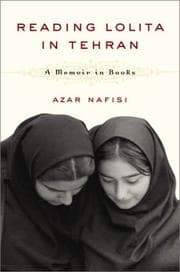
- 2. The Cultural Masterpiece: Reading Lolita in Tehran by Azar Nafisi
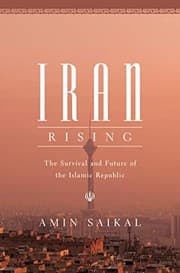
- 3. The Modern Deep-Dive: Iran Rising by Amin Saikal
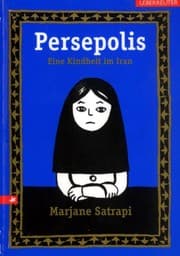
- 4. The Visual Epic: Persepolis by Marjane Satrapi
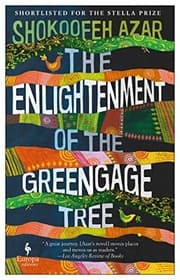
- 5. The Psychological Mirror: The Enlightenment of the Greengage Tree by Shokoofeh Azar
- Which Iran are you looking for?
- 3 Rules for Understanding a Nation in Conflict
If you turn on the news in April 2026, Iran is a collection of satellite photos and ominous government statements. We talk about the regime, the proxies, and the "breakout time" as if a nation of 90 million people were merely a laboratory experiment in geopolitics.
But to truly understand why Iran moves the way it does, you have to look at the stories they tell themselves. You have to understand the tension between a glorious, pre-Islamic Persian past and a rigid, revolutionary present. You have to understand the "taarof" (the complex system of etiquette) and the deep, poetic melancholy that defines the Iranian spirit.
If you want to move beyond the talking heads, these are the five books that explain the Iran the cameras never see.
1. The Historical Anchor: All the Shah's Men by Stephen Kinzer
You cannot understand the Iran of 2026 without understanding the summer of 1953. Kinzer's book is a cinematic, meticulously researched account of the CIA-backed coup that overthrew Iran's democratically elected Prime Minister, Mohammad Mossadegh.
This is the "original sin" of US-Iranian relations. For the modern reader, it explains why "sovereignty" is not just a political buzzword in Tehran, but a visceral, historical trauma. It is the best place to start if you want to know why the distrust runs so deep.
The Golden Nugget: History does not move in a straight line; it moves in a circle around 1953.
2. The Cultural Masterpiece: Reading Lolita in Tehran by Azar Nafisi
While the world focuses on the Revolutionary Guard, Nafisi focuses on the living room. This memoir tells the story of a professor who gathered seven of her female students to read forbidden Western classics in secret.
It is a stunning exploration of how literature becomes a form of resistance. It captures the quiet, domestic rebellion of Iranian women long before the "Woman, Life, Freedom" movement became a global hashtag. It is the most human book on this list.
The Golden Nugget: In a world of ideological noise, a private imagination is a revolutionary act.
3. The Modern Deep-Dive: Iran Rising by Amin Saikal
If you want a book that bridges the gap between history and the current 2026 headlines, this is it. Saikal provides a comprehensive look at how the Islamic Republic has survived decades of sanctions, internal protests, and regional wars.
It is an intellectual's guide to the "Resistance Axis." It explains the logic of the Iranian leadership without falling into the trap of oversimplification. If you want to understand the strategic brain of the regime, start here.
The Golden Nugget: Survival is the primary ideology of the Islamic Republic.
4. The Visual Epic: Persepolis by Marjane Satrapi
Do not let the fact that this is a graphic novel fool you. Persepolis is one of the most vital historical documents of the 1979 Revolution. It follows a young girl growing up in Tehran as her world changes from the decadent Shah era to the strict religious rule of the Ayatollahs.
It is funny, heartbreaking, and visually iconic. It captures the confusion of a generation that was told to love their country while their country was being dismantled. It is the perfect entry point for anyone who finds traditional history books too dense.
The Golden Nugget: You can change the laws, but you cannot change the memories of a child.
5. The Psychological Mirror: The Enlightenment of the Greengage Tree by Shokoofeh Azar
This is the "wildcard" choice. It is a work of magical realism that feels like it was written in a dream. Set in the years following the 1979 Revolution, it follows a family fleeing the violence into the forest.
This book captures the "Persian Vibe" better than any news report. It is steeped in folklore, Zoroastrian myths, and a deep sense of loss. It explains the Iranian relationship with the spiritual world and the way they process the tragedies of the present through the legends of the past.
The Golden Nugget: To survive a nightmare, one must sometimes hide inside a myth.
Which Iran are you looking for?
- If you want to understand the political friction with the West: Start with All the Shah's Men.
- If you want to feel the pulse of the Iranian people today: Read Reading Lolita in Tehran.
- If you want a crash course in the 1979 Revolution: Pick up Persepolis.
- If you want the deep, poetic, and slightly surreal soul of the nation: Go with The Enlightenment of the Greengage Tree.
3 Rules for Understanding a Nation in Conflict
- Separate the People from the Palace: The most common mistake is assuming the Iranian people and the Iranian government are a monolith. They are often in direct opposition to one another.
- Look for the Poetry: Iran is a nation of poets. To understand their politics, you have to understand their metaphors. If a book doesn't mention the heart or the garden, it probably isn't getting the full picture.
- Trust the Memoirs: In a country with heavy censorship, the truth often hides in personal stories rather than official histories.
Books mentioned in this article
Want more books like these?
Tell us what you're in the mood for and get 3 perfect picks.
Discover your next read→